
Carpet mold is more common than you think and if you haven’t had yours professionally cleaned in over a year, there’s a good chance that there will be some living deep within the fibers. The scary part about it is that you’ll never know it’s there until it starts affecting your family’s health.
What Are the Signs?
- Visible Mold Spots
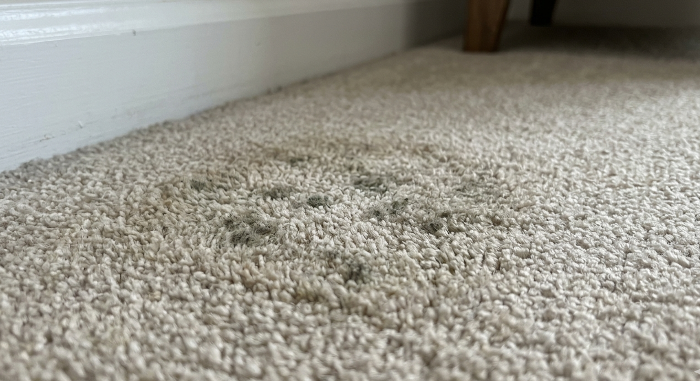 The most obvious indicator is seeing mold itself. These spots can appear green, black, or even white, often forming in clusters. Once you can see the mold, the infestation is already advanced and requires immediate attention.
- Extended Dampness
Carpet that stays damp for more than 24 to 48 hours after a spill, leak, or flood is highly susceptible to mold growth. If your carpet feels consistently moist, mold is likely forming below the surface.
- Health Symptoms
Unexplained health issues can point to hidden carpet mold. If you or your family members experience persistent allergy flare-ups, coughing, respiratory irritation, or even skin rashes when spending time in certain rooms, mold could be the hidden trigger. Source: Angi
- Odors
Notice anything musky? This could be the first sign that mold is present in your carpet. Mold thrives in a damp and enclosed environment, and this could give off an odor. Unfortunately, it may not be noticeable to you if you spend the most time in your home. One tip is to as your visitors if they notice any muskiness in your home.
- Discoloration
An easy, tell-tale sign that your carpet has mold is merely taking a look. In advanced stages, mold can develop discoloration which can make it easy to spot on your carpet. If you notice black or green spots on your carpet, this is a sign that your carpet has mold. Be sure to check under your carpet as well since the area underneath the carpet could develop mold discoloration before your actual carpet does. Source: Plymouth Carpet Services
Preventing Mold Growth in Carpeting
The best method for combating mold is to not allow mold growth in the first place. The best way to do so is by ensuring that conditions conducive to growth do not exist. Below are some ways to prevent mold growth in carpets.
- Reduce indoor humidity. The use of dehumidifiers will help control moisture in the air, depriving mold spores of the water they need to grow into mold. A range of 30% to 60% humidity is acceptable for interiors.
- Never allow standing water. Carpet exposed to standing water will quickly be ruined. If standing water ever occurs because of a leak or a spill, all carpeting exposed must be immediately cleaned and dried. The top and bottom surfaces of the carpet, any padding, and the floor underneath must be cleaned and completely dried within a short period of time after exposure to standing water if the carpet is to be saved. If a large flood has occurred, or if standing water has been present for any extended period of time, the carpet will probably need to be replaced.
- Clean smart. When carpeting needs to be cleaned, try to use a dry form of cleaning, when possible. If any water, liquid, or other moisture has come in contact with the carpet during cleaning, be sure it is dried thoroughly afterward. Source: interNACHI
Don’t let carpet molds compromise the comfort of your home or the health of your family. If you start noticing any of these signs, it’s best that you call a professional right away!